Industry Challenges
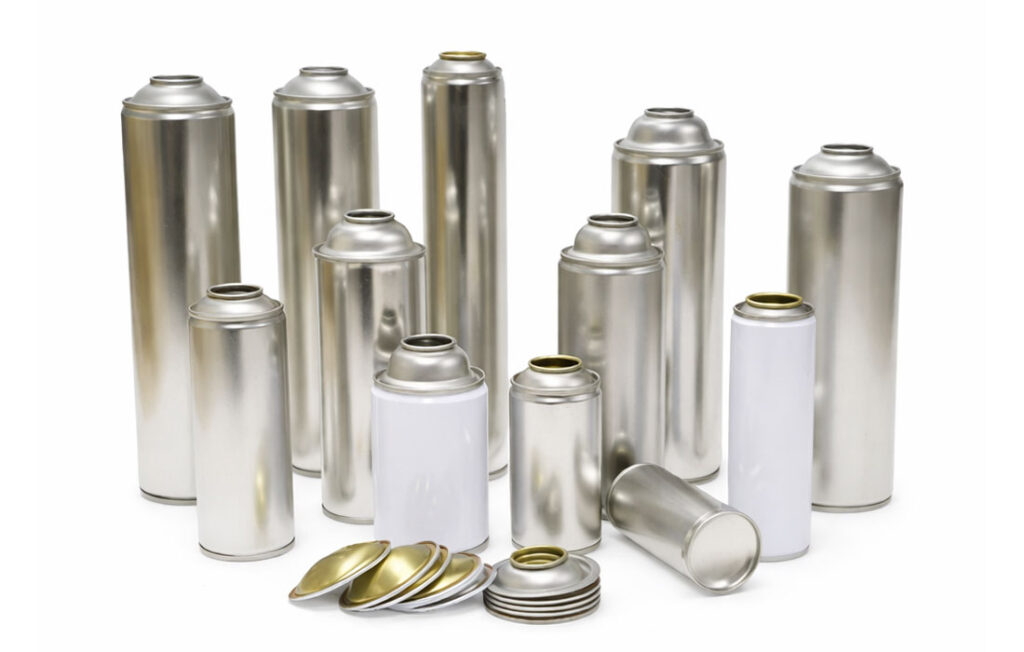
Aerosol can manufacturers face unique challenges where pressure and precision must be carefully balanced. Containers need to withstand internal propellant pressure, while metal materials must support accurate forming and welding.
At the same time, surface quality affects printing results, and components must integrate smoothly with valve and cap systems to ensure reliable performance.
| Pressure Resistance | Structural Strength | Corrosion Protection | Compatibility with Valve Systems |
| Used for forming aerosol can bodies, with the pressure resistance needed for stable performance during filling, storage, and use. | Ensures strong structural stability for aerosol can bodies, maintaining shape during handling and transport, while supporting high-volume production requirements. | Protective coatings resist corrosion from various contents, maintaining surface stability and making them suitable for branded aerosol packaging applications. | Designed for can ends and components, enabling smooth integration with valve systems and ensuring precise fitting across various aerosol packaging configurations. |
Common Aerosol Packaging Applications


Personal Care Products
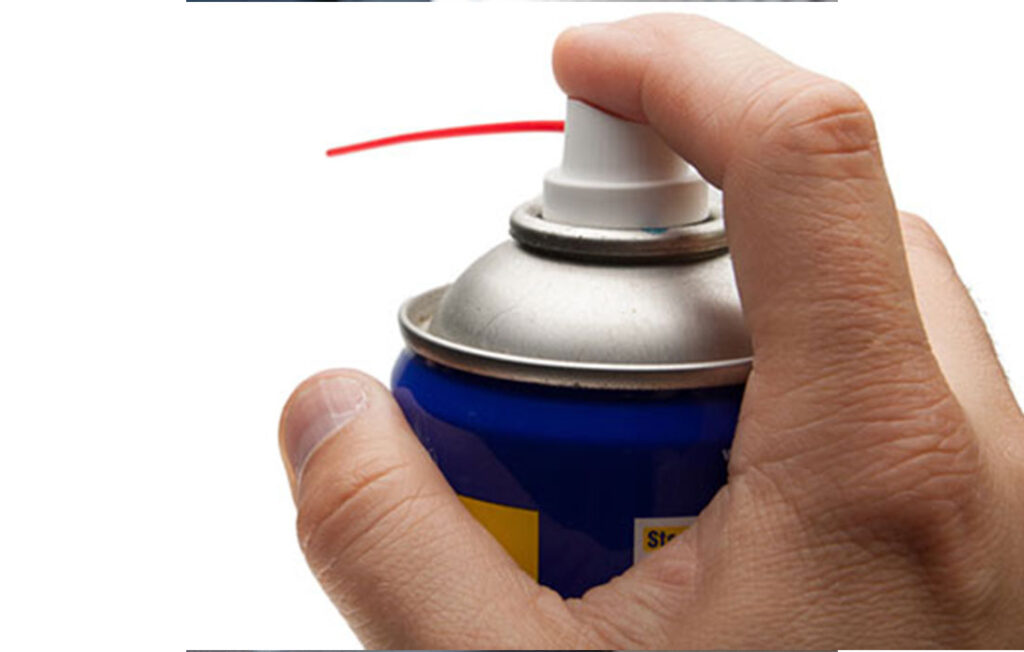
Suitable for personal care products such as hair spray, deodorant, and shaving foam, offering consistent container quality and compatibility with different formulations and filling processes.
Household Products
Applied in household products such as air fresheners, insecticides, and cleaning sprays, supporting efficient filling and reliable packaging performance in daily consumer use.
Industrial Products
Designed for industrial applications including lubricants, anti-rust sprays, and maintenance chemicals, meeting diverse formulation needs in demanding operating environments.
Structure of an Aerosol Can
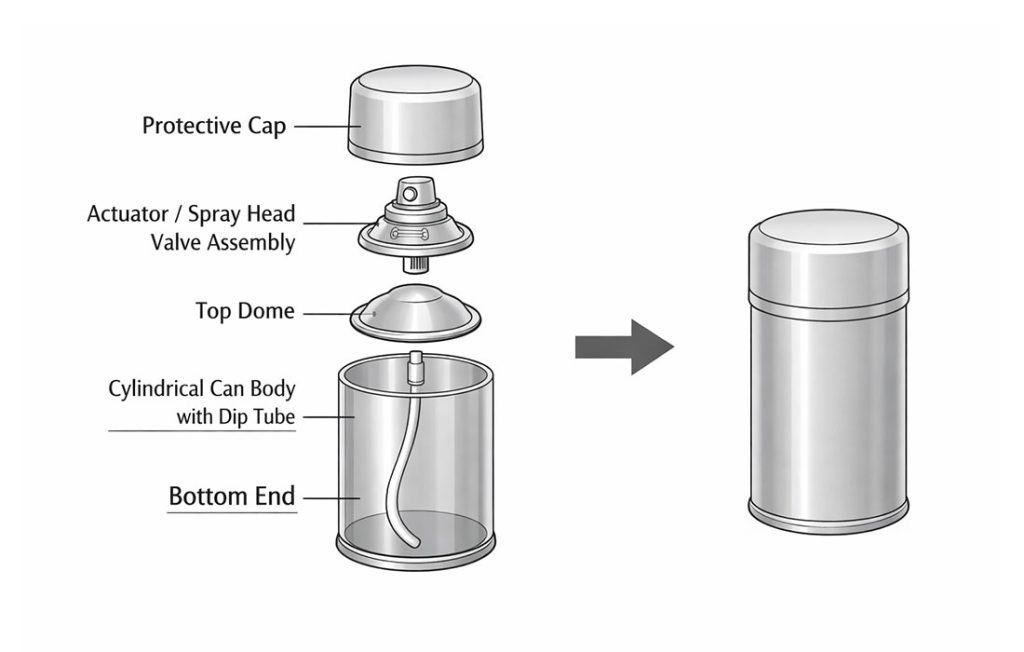
Aerosol cans typically consist of:
Can Body
Top Dome
Bottom End
Aerosol Valve
Actuator / Spray Head
Protective Cap
Aerosol Can Manufacturing Process

| Material | Description | Application |
|---|---|---|
| Electrolytic Tinplate | Strong material with reliable surface protection for consistent forming | Aerosol can bodies |
| Tin Free Steel | Chromium-coated steel with good surface properties for coating and forming | Can ends and functional components |
| Tinplate Sheets | Flat material prepared for precise forming and shaping | Aerosol can production |
| Tinplate Coils | Continuous supply material suitable for high-volume processing | High-volume aerosol can manufacturing |
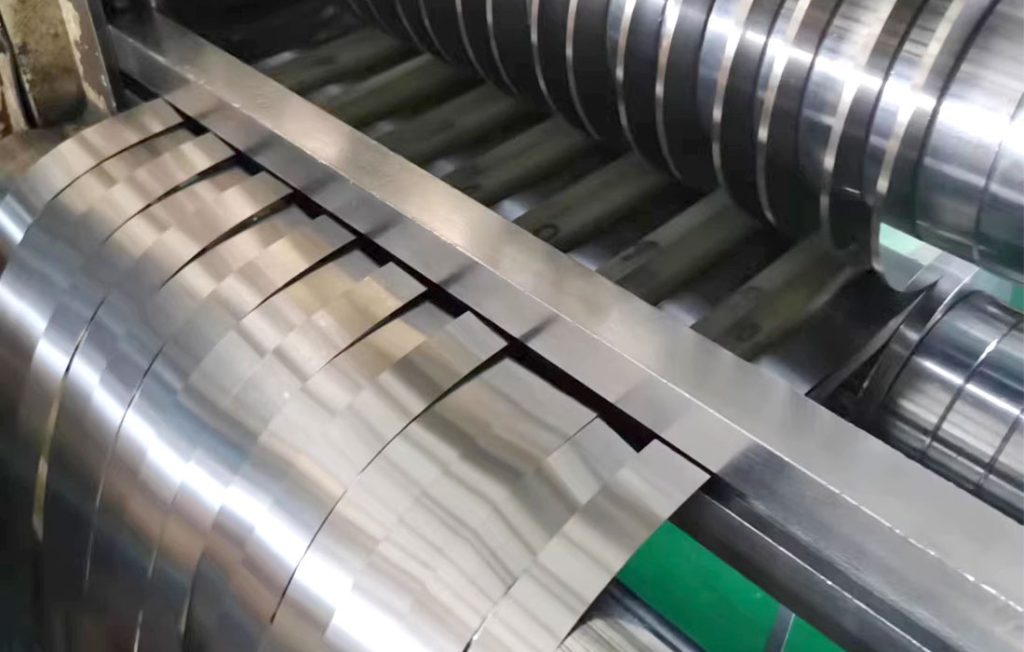
Coil Slitting & Sheet Cutting
In aerosol can production, tinplate coils are slit and cut into precise sheet sizes required for can body manufacturing. This stage focuses on dimensional accuracy and edge quality, which directly affect welding performance and forming consistency. Properly prepared sheets help ensure smooth processing in later steps such as body forming and assembly.
With controlled slitting and cutting, FANWO packing supports stable material flow and reduces variation across production, making it easier to achieve consistent results in high-speed aerosol can manufacturing lines.

Metal Printing & Coating
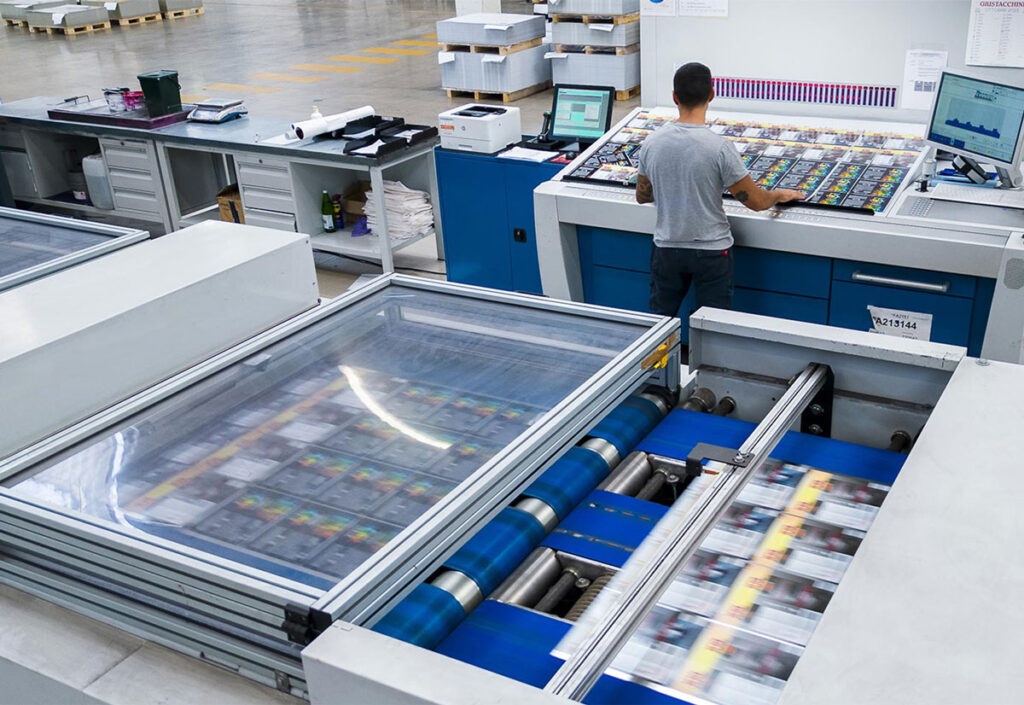
Aerosol packaging is often the first thing customers notice, making surface finish a key part of product value. From sharp, high-definition graphics to coatings tailored for different formulations, every detail must work together without affecting downstream processing.
FANWO PACKING combines printing precision with coating control to deliver surfaces that look refined and perform reliably. This allows customers to achieve strong shelf presence while maintaining compatibility with forming, assembly, and filling operations across a wide range of aerosol products.
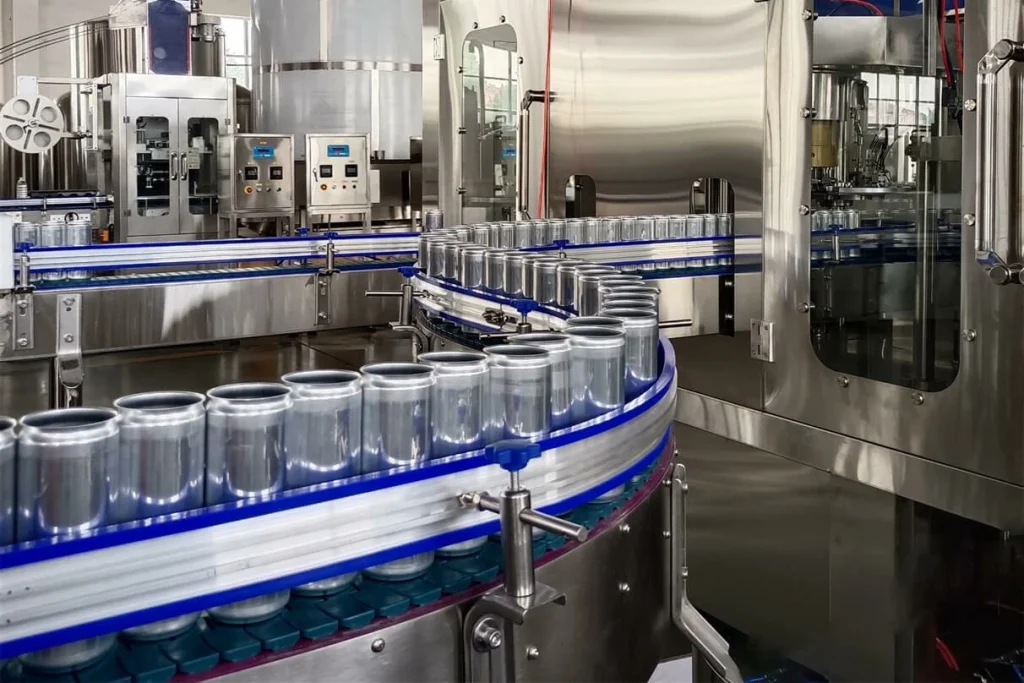
Can Body Welding & Forming
The performance of an aerosol can starts with the precision of body welding and forming. In this stage, flat tinplate is shaped into a cylindrical structure, where seam alignment and forming accuracy must be carefully controlled. Even minor deviations can affect pressure behavior and overall reliability.
Stable welding consistency and controlled forming processes help ensure each can body maintains its shape and structural integrity. The result is a well-formed container that provides a dependable foundation for subsequent assembly and real-world aerosol applications.
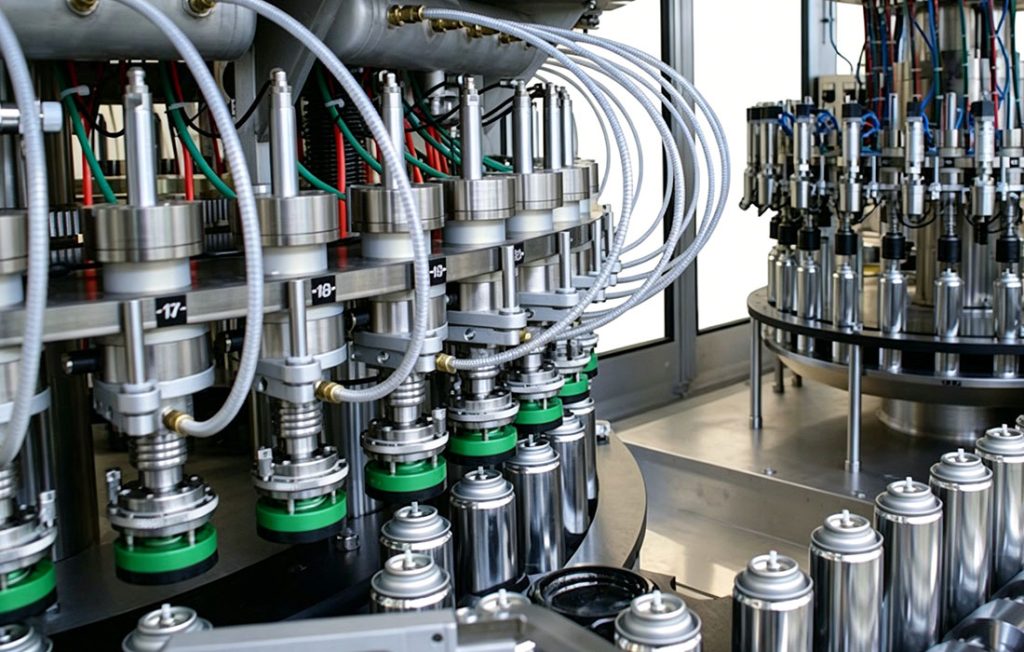
Dome & Bottom Assembly
The dome and bottom define how an aerosol can responds to pressure and handling conditions. Their shape and connection influence how forces are distributed throughout the container, helping reduce the risk of deformation.
Accurate alignment and secure assembly are essential to maintain structural balance. When properly controlled, this stage contributes to a stable container structure and prepares the can for valve installation and final sealing.
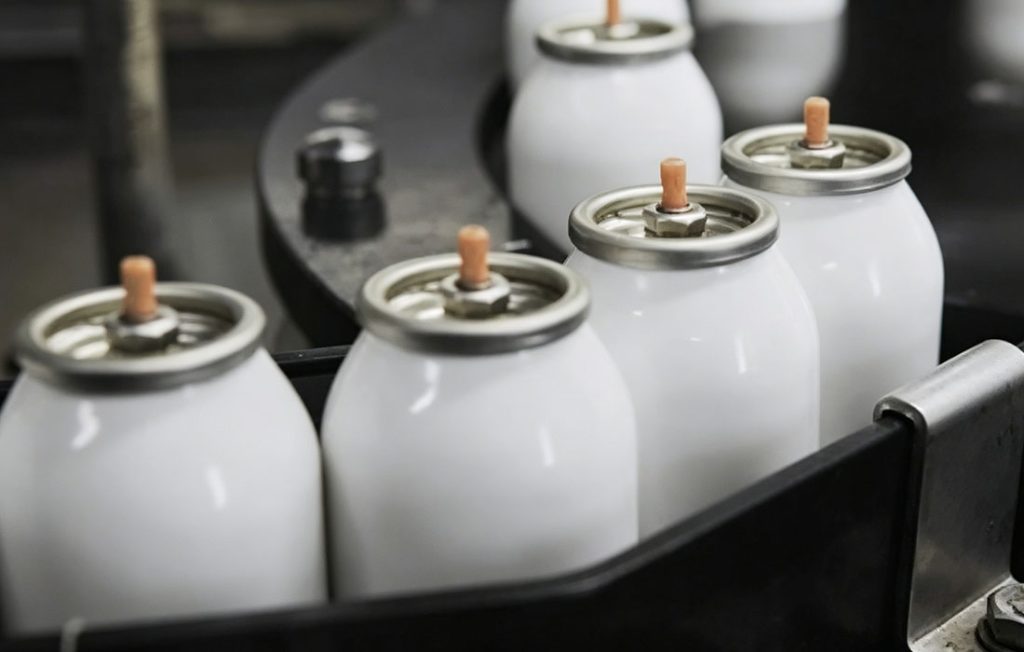
Valve Crimping & Sealing
Valve crimping and sealing are critical to the safe operation of an aerosol can. In this stage, the valve is securely attached to the container, forming a tight and reliable seal. Even small inconsistencies can lead to leakage or affect product performance.
Proper crimping helps maintain internal pressure while allowing controlled and consistent dispensing. When this process is well managed, the can remains sealed, functional, and stable throughout its entire service life.
Material Customization Options
Aerosol can production often requires adjustments to match different formulations and filling systems. S.H PACKING offers flexible options in material thickness, surface treatment, and coating selection, helping ensure smooth processing and consistent results across various aerosol applications.
Thickness
Tin coating weight
Sheet size
Coil width
Surface finish
Printing compatibility
FAQ – Aerosol Can Solutions
What factors affect aerosol can pressure performance?
Material consistency, can structure, and forming accuracy all influence how the container performs under internal pressure conditions.
How is spray performance related to can quality?
Stable can structure and proper compatibility with valve systems help ensure smooth and controlled spray output during use.
Can your materials support different aerosol formulations?
Yes, material selection and surface treatment can be adjusted to match various formulations used in personal care, household, and industrial products.
How do you ensure compatibility with valves and components?
Controlled dimensional accuracy and stable forming help ensure proper fit with valves, caps, and related aerosol components.
Is your production suitable for high-volume aerosol manufacturing?
Yes, stable material performance supports continuous processing and consistent output in high-speed production environments.
Comments are closed